SkyRad

Technology built around radiative cooling physics

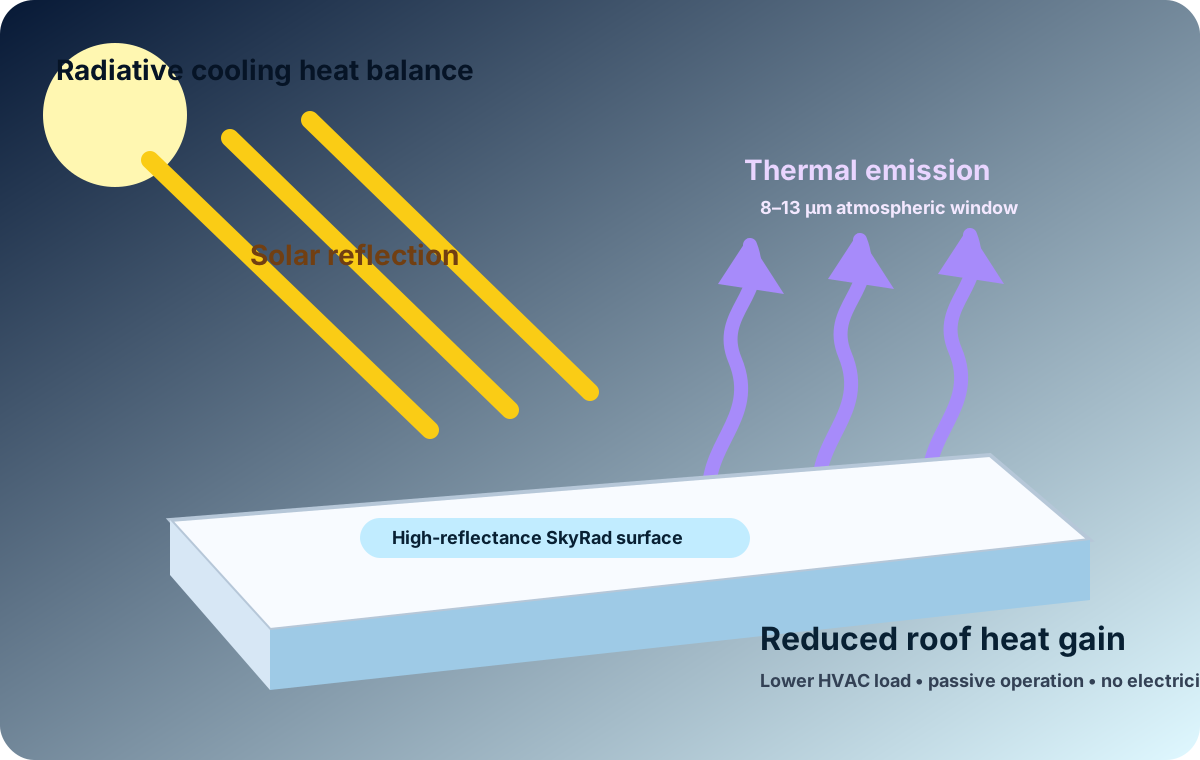
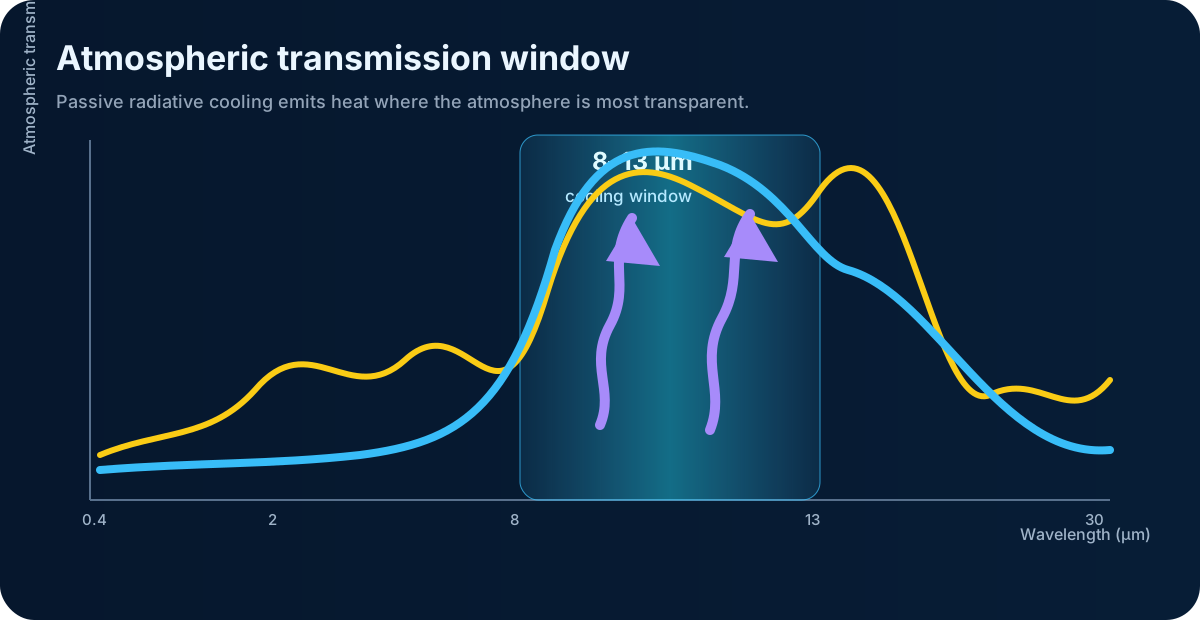
SkyRad positions passive cooling around a simple thermal principle: reject as much incoming solar energy as possible, then emit heat through the atmospheric window so a building envelope accumulates less thermal load.

01

Reject heat before it enters

High solar reflectance reduces the amount of incident energy absorbed by exposed roof and facade surfaces.

02

Emit retained heat efficiently

Mid-infrared emissive behavior enables materials to release thermal energy in the wavelengths where the atmosphere is most transparent.

03

Reduce cooling-system burden

The commercial objective is lower thermal load on the building envelope, which can reduce cooling demand and ease HVAC stress.

Why this matters commercially

The strongest building case for passive cooling is not gadget-level novelty. It is a lower heat baseline on high-exposure surfaces, which supports energy performance, comfort targets and long-term operational resilience.

Roof-first deployment logic

Large-format roofs absorb the most solar load. That makes commercial roofs a priority category for pilot deployment and measurable performance validation.

Retrofit-friendly narrative

Passive cooling can be positioned as an add-on thermal-management layer rather than as a full replacement for existing systems.